How Do I Set a Budget So I Don't Get a Surprise Bill?
A runaway loop can drain a credit balance before anyone notices. Gateway credits put a boundary around team spend, while API key budgets keep one workload from consuming the entire balance.
Outcome
Give one workload its own API key budget, then document every setting that can refill the balance or move charges to a provider account.
Fast Track
- Create or edit a dedicated API key for one workload
- Set its budget and reset period
- Review auto top-up, BYOK billing, and system-credential fallback
Hands-on exercise
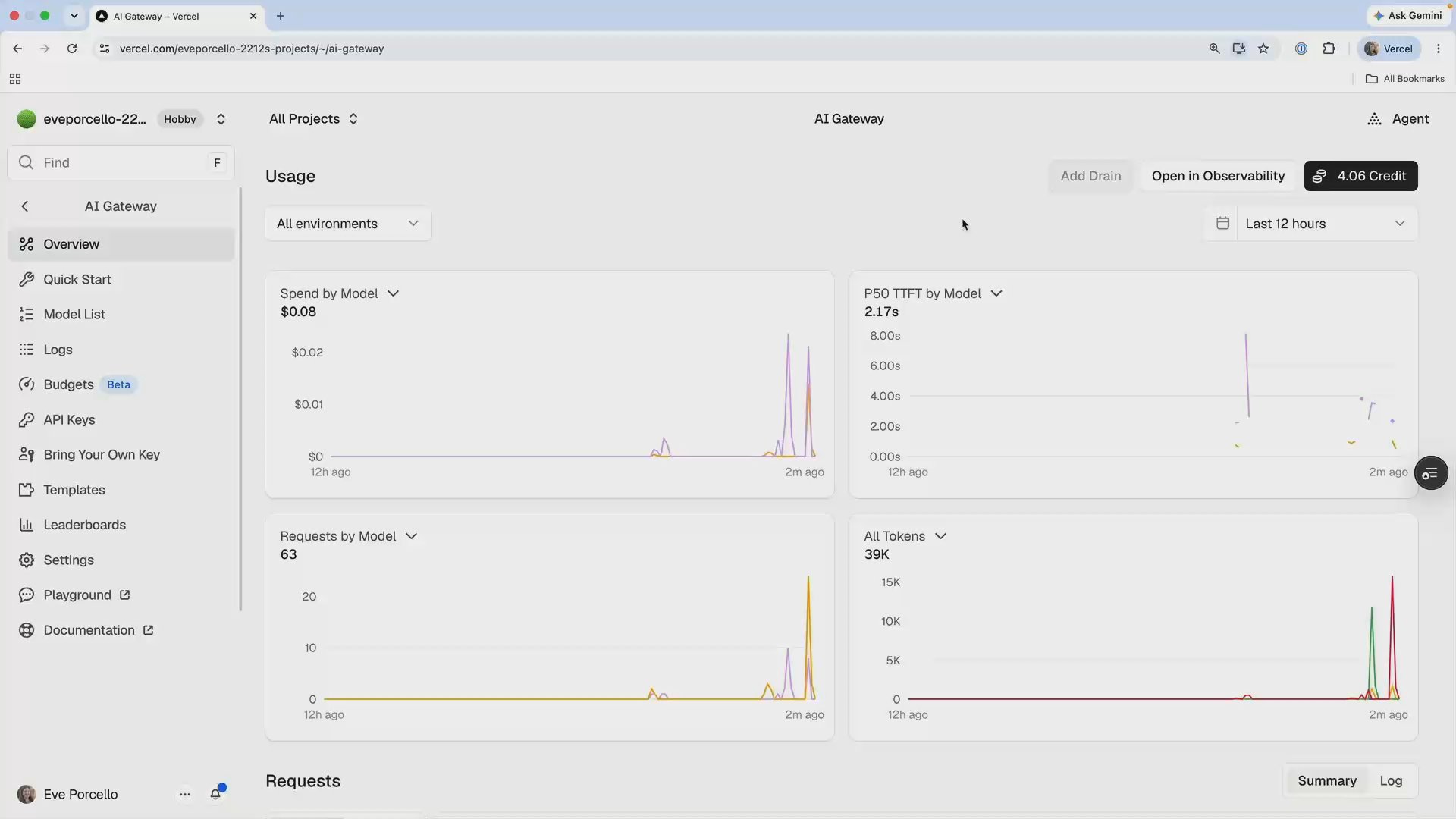
Open API Keys in the AI Gateway dashboard and choose a key used by one workload. Avoid a shared key with five unrelated jobs attached. That key cannot tell you which job spent the money.
Set a limit and choose the reset period that matches how your team reviews spend. The key row shows current spend against the limit, which makes it useful for both control and attribution.
Now review the settings that sit outside the key budget:
- Auto top-up: Can refill the team balance automatically
- BYOK provider billing: Sends successful BYOK charges to the provider account
- BYOK fallback: Can use Gateway system credentials and Gateway credits when your provider credential fails
Record the decision in the demo README:
## Spend policy

- Workload: order assistant
- Gateway key: dedicated key with a monthly reset
- Auto top-up: off
- BYOK: none configured
- Reviewed: <date>, by <owner>
Use the states your team chose. The example keeps one spending path active and gives the order assistant a budget of its own.
Try It
Confirm three pieces of evidence:
- The workload key shows spend against its limit
- The key's edit view shows the intended limit and reset period
- The README matches the current auto top-up and BYOK settings
If requests continue after the limit, confirm that the application is using the budgeted key rather than another team key. If a single request carries the total slightly over the limit, that is the documented soft-cap behavior.
Commit
git commit -m "docs(spend): record the order assistant budget policy"Done-When
- One workload has a dedicated API key with a budget and reset period
- You can explain the soft-cap behavior
- Auto top-up, BYOK billing, and fallback are documented
- The README names an owner and review date
Solution
The solution is a budgeted workload key plus the written spend policy. The dashboard enforces the limit, while the README records the billing paths that the limit does not cover.
Related Questions
Was this helpful?